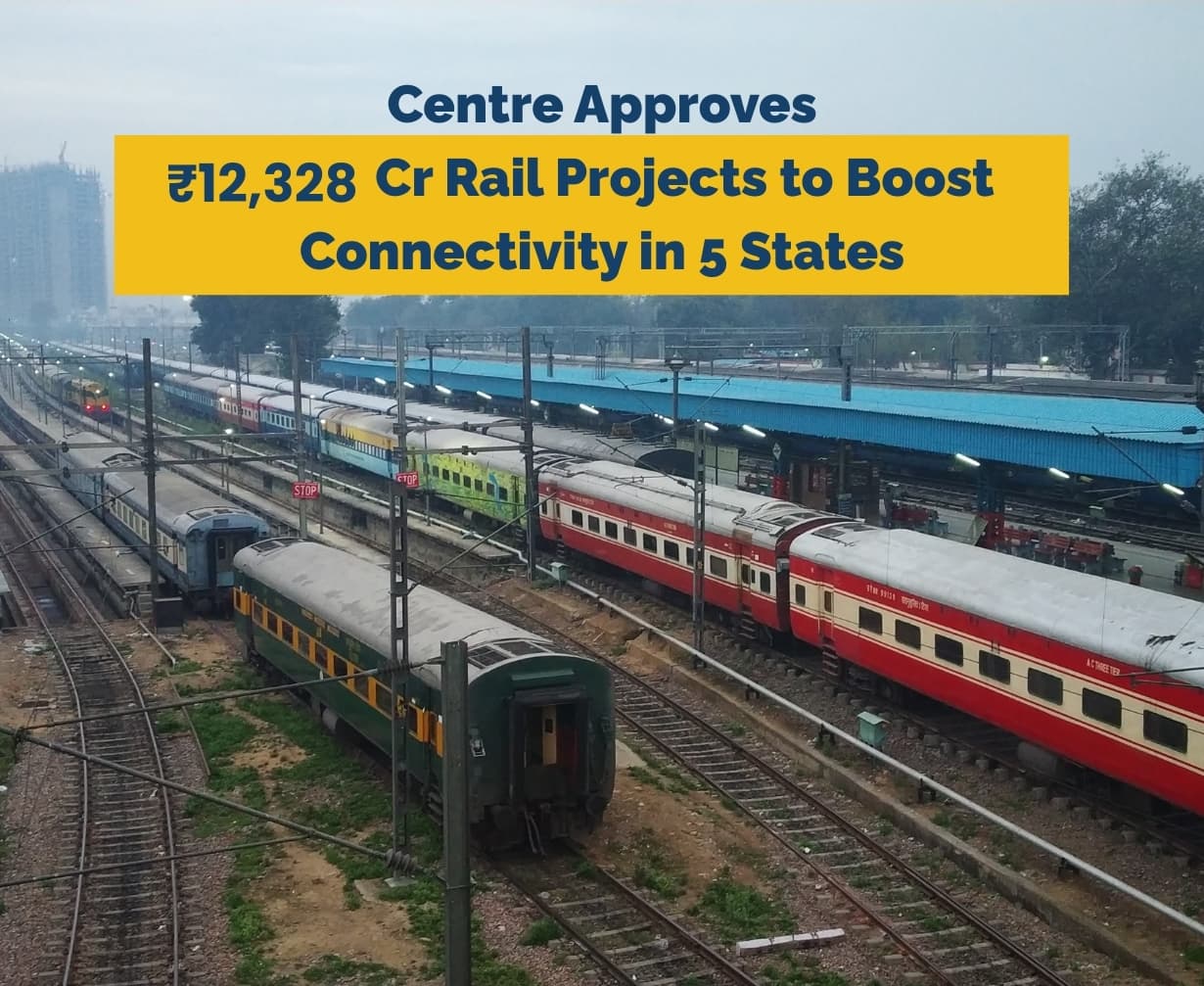
In a dramatic move set to change the landscape of India's railways, the Union Cabinet, under the competent direction by Prime Narendra Modi Prime Minister Narendra Modi, granted its unanimous approval to four transformational railway projects that are worth a staggering Rs12,328 crore. These ambitious plans, which will add 565 km of new lines on the railway, will provide a variety of benefits in connectivity, freight movement, as well as tourism in five major states. This strategic expansion demonstrates the government's unwavering dedication to improving the infrastructure of the country and driving economic growth.
The projects approved by the government cover many crucial improvements, along with new projects. A groundbreaking new rail line will connect Deshalpar-Hajipir-Luna and Vayor and Lakhpat, strategically enhancing connectivity in the far-flung regions of Gujarat. To further strengthen existing corridors, third and fourth lines will be constructed along the route between Secunderabad (Sanathnagar) as well as Wadi, and a crucial third line will run from Bhagalpur up to Jamalpur. In addition, the doubling of the New Tinsukia Furkating line is expected to significantly increase capacities in the northeastern region.
These projects go beyond a simple expansion of tracks. They are a major step toward an efficient and sustainable transportation system. Through the expansion of rail infrastructure, the government is hoping to dramatically reduce the cost of logistics for industries, a crucial aspect in improving India's competitiveness in the market. Additionally, this plan can significantly decrease its Indian Railways' reliance on imports of oil, which will lead to more autonomy in energy for the country. Additionally, the environmental advantages are similarly significant, with the development of these new lines expected to reduce CO2 emissions and contribute to a greener, cleaner future. The scale of these projects will provide a significant boost to jobs, with approximately 251 million human-days of direct jobs created, and boost local economies.
Gujarat is expected to benefit greatly through this initiative, particularly the extremely remote Kutch region. New lines which will add the 145 and 164 km of tracks, respectively, and will allow access to previously untapped areas at the estimated cost of Rs. 2,526 crore and a three-year deadline for completion. In addition to facilitating the vital transport of goods such as cement, salt, coal, clinker, and bentonite, the expansion is of strategic significance in connecting the ecologically significant Rann of Kutch. The historical and cultural environment of Gujarat will be accessible by rail, since it is the Harappan location of Dholavira, as well as the prestigious Koteshwar temple, the Narayan Sarovar, and the historical Lakhpat fort are all accessible through the railway network. Thirteen railway stations are planned to be built, directly affecting approximately 866 villages and 16 lakh people, changing their access to services and opportunities.
The ripple effects of these projects will reach far beyond Gujarat. In Karnataka, Telangana, Bihar, as well as Assam, around 3108 villages, which house an astounding 47.34 lakh inhabitants, will benefit from improved connectivity. The 173 km Secunderabad (Sanathnagar)-Wadi fourth and third line that runs through Karnataka and Telangana is an investment of $5,012 crore. It is scheduled to be completed in five years. In Bihar, the 53-km Bhagalpur -Jamalpur third line, which has an investment of Rs 1,156 crore, will be operational in just three years. In the meantime, the northeastern State of Assam will see the conclusion of the Rs3,634 crore, 194-km Furkating-New Tinsukia expansion project in four years.
Also Read: Rs250 Crore Elevated Road Project Announced to Boost Greater Noida Connectivity
The economic value of freight movements cannot be understated. The increased routes are essential to ensure the safe transportation of vital commodities like coal, cement, clinker, fly ash,h and steel fertilizers, containers, agricultural products, and petroleum products. The capacity expansion is anticipated to add a staggering annual 68 million tonnes to the freight movement. This will, in turn, result in significant reductions in the import of oil, approximately 56 million Liters, as well as a dramatic reduction in CO2 emissions equivalent to planting 14 million trees.
In most fundamental terms, the Union Cabinet's decision to approve these four rail projects is the beginning of India's path to an increasingly connected and prosperous future. These projects aren't just about the construction of tracks. They focus on creating pathways for development, stimulating economic growth, and enhancing the lives of millions across the country.
Source: Realtynxt
.jpeg&w=3840&q=75)