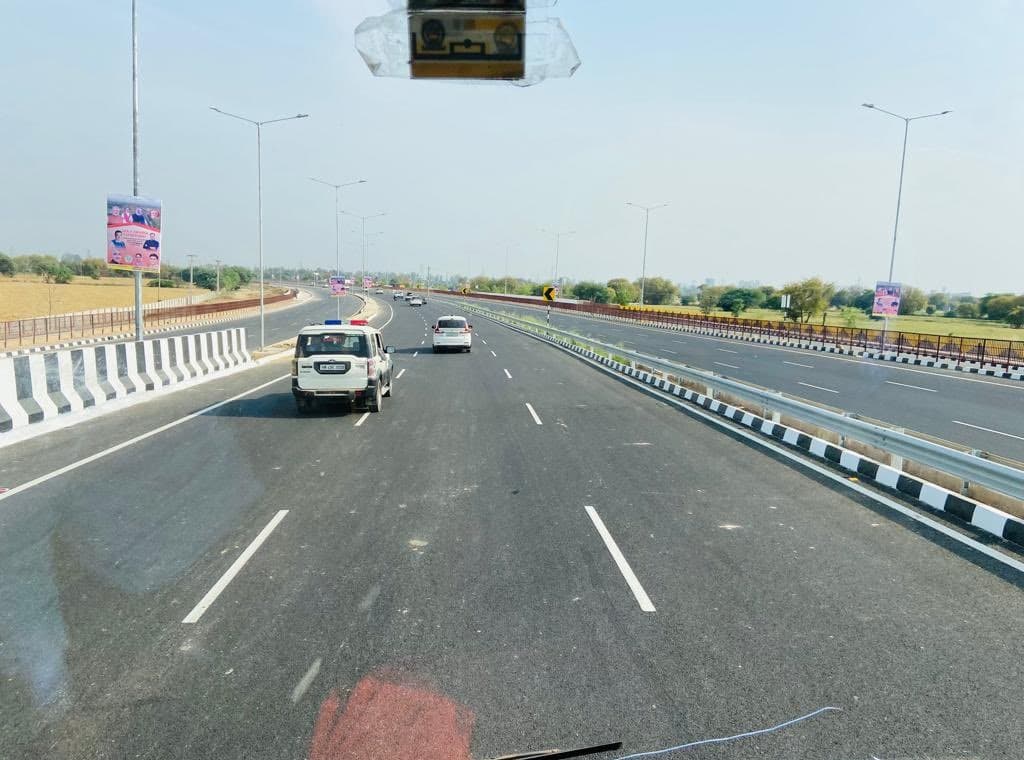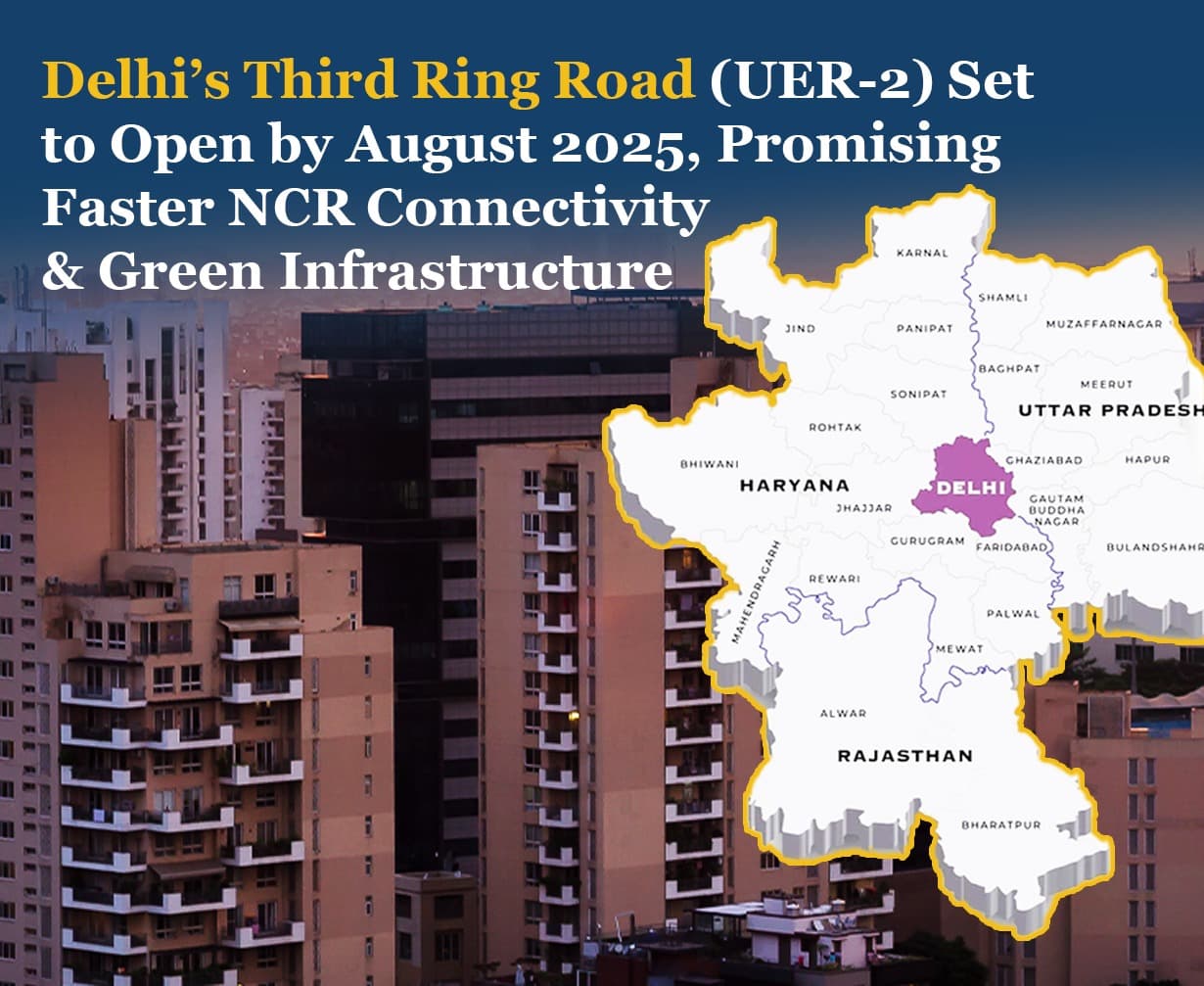
The National Capital is just on the verge of a major milestone in infrastructure with the scheduled opening of Urban Extension Road 2 (UER-2), popularly called The third Ring Road. It has been confirmed by officials that the expressway with six lanes will be operational in August 2025. and more than 90 percent of the construction work is being completed..
Its length is up to 76 kilometres. It is expected to drastically reduce traffic congestion in Delhi and will improve connection to Indira Gandhi International (IGI) Airport, north-west, south-west, Delhi, as well as at the Haryana border. According to officials of the National Highways Authority of India (NHAI), the road will reduce travel time for several routes by 40 to 60 percent and provide much-needed relief for commuters in the NCR region.
Key Project Details
-
Name: Urban Extension Road-2 (UER-2)
-
Length: 76 km (54.21 km in Delhi, 21.5 km in Haryana)
-
Implementing Agency: National Highways Authority of India (NHAI)
-
Financing in the Delhi Section: Delhi Development Authority (DDA)
-
Construction Packages: 5
-
Expected Completion: August 2025
UER-2 was initially conceived to be part of the Delhi Master Plan Road 2021, but was later transformed into a National Highway Project. The project is currently being implemented in five phases and has several sectionsespecially those that pass that pass through Najafgarh, Mundka, and Alipur -- currently accessible for public access.
Connectivity Gains for Delhi-NCR
According to the report of the Union Road Transport Ministry that was shared with Delhi's administration, this plan is likely to revolutionize the way people travel across the NCR.
1. Enhanced Airport Connectivity
This new route will offer quicker access to west and north Delhi towards IGI Airport, reducing dependence on the congested highway NH-48.
2. Direct Links to Key Cities
UER-2 will provide seamless routes connecting Delhi with major hubs like Chandigarh, Gurugram, Faridabad, and Noida, providing commuters a variety of routes and also lessening the load on existing highways.
3. Boost for Underserved Areas
Localities such as Najafgarh, Mundka, Karala, Alipur, and Bawana are now able to have direct connections across Delhi and NCR. This is expected to speed up the pace of real estate, trade, and industrial growth in these areas.
4. Integration with other Corridors
The ring road that is being constructed will be integrated with major highways such as the NH-48, Dwarka Expressway, and the forthcoming Sohna-Faridabad highway, which will create a strong transportation network for NCR.
Dwarka Expressway
The Dwarka Expressway that directly connects to UER-2 is also nearing the point of completion and will be open within the next 15 days
-
Length: 28 km
-
Cost: Rs8,611 crore
-
Completion Status: 98% finished
-
Delhi Section: It includes a tunnel as well as underpasses close to IGI Airport, targeted for mid-June 2025.
-
Haryana Section: Operational since March 2024.
The expressway will serve as a bypass for NH-48, which will improve access for travelers between IGI Airport, Dwarka, Gurugram, and the Yashobhoomi convention center located in Sector 25 in Dwarka. Officials have said that this route has already made travel easier in areas such as Mahipalpur, Dwarka, Vasant Kunj, and Najafgarh, providing more comfortable travel to Gurugram and the airport.
Sustainable Construction Practices
One of the most notable aspects of UER-2 design is its green construction method. First, NHAI reused over two million tonnes of the legacy trash of Ghazipur landfill. The Ghazipur garbage dump to construct the road.
This has led to:
-
Reduced the height of the landfill by 7 meters
-
A lower dependence on natural resources like stone and soil
-
Save money in construction
-
Greenhouse gas emissions are reduced
The impact of this initiative can also influence the other projects in infrastructure. NHAI has confirmed that inert material from biomining is being deployed in multiple projects, including the DND-Faridabad-Ballabhgarh-Sohna bypass. Reuse of silt, stones, and construction waste is expected to play a major part in sustainable road construction all across NCR.
Economic Impact
In the coming months, Delhi's 3rd Ring Road is expected to be a huge benefit:
1. Decongestion of Inner Roads
As UER-2 acts as a bypass, both the inner and central Delhi roads will experience less traffic and congestion, which will improve air quality while reducing noise pollution.
2. Boost to Real Estate
Connectivity improvements usually spur property growth. The areas along UER-2, like Najafgarh, Bawana, and Karala, may become new commercial and residential hubs.
3. Industrial Growth
Improved road accessibility will improve trade and logistics in Delhi's industrial clusters that are peripheral to the city, particularly in the south-west and north-west of Delhi.
4. Time and Fuel Savings
A shorter commute will result in less energy consumption and lower expenses for transporters and commuters alike.
Current Road Projects in NCR
Third Ring Road is part of an overall road infrastructure push in Delhi-NCR.
-
Projects in the works: Rs34,589 crore (594 kilometers of roads)
-
New Projects sanctioned: Rs23,850 crore (128 km of roadworks to be completed)
This major investment exemplifies the government's commitment to turning NCR into a world-class hub for mobility.
Political and Public Significance
The project has both political and developmental significance. In the current Lok Sabha campaign, Union Minister Nitin Gadkari stressed UER-2 as a model of sustainable, innovative construction. Similar to that, Delhi's government, headed by the Chief Minister Rekha Gupta, is watching the progress of UER-2 closely, seeing it as an important step towards improving the urban infrastructure as well as tackling environmental issues.
Challenges Ahead
Despite the positive progress, however, experts warn of the problems in the long-term viability of the plan:
-
Traffic Management. In the absence of proper preparation, UER-2 could become congested within a few years.
-
Environmental impact: Construction on a large scale can affect local ecosystems if it is not closely observed.
-
Integration with Public Transport: Authorities have to ensure smooth last-mile connections to metro stations as well as bus stations.
Conclusion
The Urban Extension Road-2 (UER-2), Delhi's third Ring Road, is more than just a transportation corridor. It is an idea of a sustainable, modern infrastructure. Through the combination of speed as well as connectivity, and green construction, the Rs8,000-crore project could transform urban development and commuting patterns across NCR.
The official opening is scheduled to take place in August 2025. The road will be a pivotal point in Delhi's traffic management. It will provide an easier connection to airports, more efficient connections to Haryana, as well as new opportunities for growth in previously neglected regions.
Source:hindustantimes
.jpeg&w=3840&q=75)